
Powered by


If you had to dig a hole larger than a house, how would you do it?
If you had to dig a hole larger than a house, how would you do it? You might be thinking about all the different equipment you’d need and how many people would have to help you - but have you considered what measures you’d take to keep people safe? In this Sprint, you’ll be doing just that.
Much of the water that we use every day is transported through a network of underground pipes, meaning that the work of civil engineers in the water industry must often excavate a site in order to begin work.
Andrew Bracken has 19 years of experience in the construction industry, predominantly in the water and gas industries, and now works as a Senior Engineer for J Murphy & Sons Construction company. Andrew started his career for Laing O’Rourke as a site engineer, where his duties would include translating designs into construction, setting out the site for the workers, checking for quality and surveying the works. Andrew then returned to education on one day per week to obtain a degree which helped him to progress onto the next step in his civil engineering career path: a senior engineering role. In this role, Andrew’s duties would include running smaller projects or sections of works on major projects, managing site engineers and producing a lot of the working documentation and procedures.
Today, in his role as senior engineer, Andrew’s work day involves managing the site team of engineers and making sure they have all the correct information they need to fulfil their roles. I work closely with the project manager, quantity survey and planner in managing the projects to a happy and safe completion, on time and on budget. More specifically, my role includes checking that the design and works are carried out to the correct standards and specifications and producing the quality plans and carry out the role as temporary works supervisor - meaning I’m in control and management of all temporary works on site. On top of that, if any lifting needs to be done, I’ll be on site producing and reviewing all lift plans.
A civil engineer in the water industry is responsible for designing, building, and maintaining the infrastructure that is used to supply clean drinking water to communities and to manage waste water. This can include designing and building water treatment plants, reservoirs, and pipes, as well as managing the operation and maintenance of these systems. They may also be involved in ensuring that the water supply meets all relevant safety and quality standards. Civil engineers in the water industry may also be responsible for upgrading and maintaining existing systems to ensure they continue to operate effectively.
Civil engineering might be the biggest sector within engineering as a whole, it impacts a broad range of our daily activities. Essentially, civil engineers design, construct, manage and maintain the infrastructure of modern society. Roads, railways, tunnels, buildings, bridges, airports, mines, dams, ports, harbours, water and sewer systems and flood mitigation works are all shaped by civil engineers!They're employed by government departments and agencies, municipal authorities, civil engineering contractors, consulting engineers and mining companies. There may also be opportunities for self-employment.
If you had to dig a hole larger than a house, how would you do it? You might be thinking about all the different equipment you’d need and how many people would have to help you - but have you considered what measures you’d take to keep people safe? In this Sprint, you’ll be doing just that.
Much of the water that we use every day is transported through a network of underground pipes, meaning that the work of civil engineers in the water industry must often excavate a site in order to begin work.


I would like to thank them for taking the time to inspire the next generation and for showing us what is possible and how Airbus is working towards sustainable fuels in order to save our environment.
Also would like to thank them for showing us the path towards working with Airbus as a career choice.
Thank you so much! I have thoroughly enjoyed this work experience opportunity. I have wanted to work in the aviation industry for so long, and this has provided great insights.
I was nervous being an individual with High functioning Autism, so seeing your inclusivity was wonderful. Thank you again.
I would like to extend my utmost gratitude for providing an outstanding aerospace engineering virtual work experience. Your dedication towards sharing your knowledge and expertise in the field is truly commendable. The efforts that you put in to help aspiring engineers like me to learn and experience the corporate world are inspirational. Your willingness to take the time to mentor us and answer our queries is genuinely appreciated.
Thank you for providing us with such a wonderful opportunity to learn and grow. Your guidance and support have helped us develop essential skills and knowledge that we can use to build our future careers. We look forward to your continued support and mentorship.
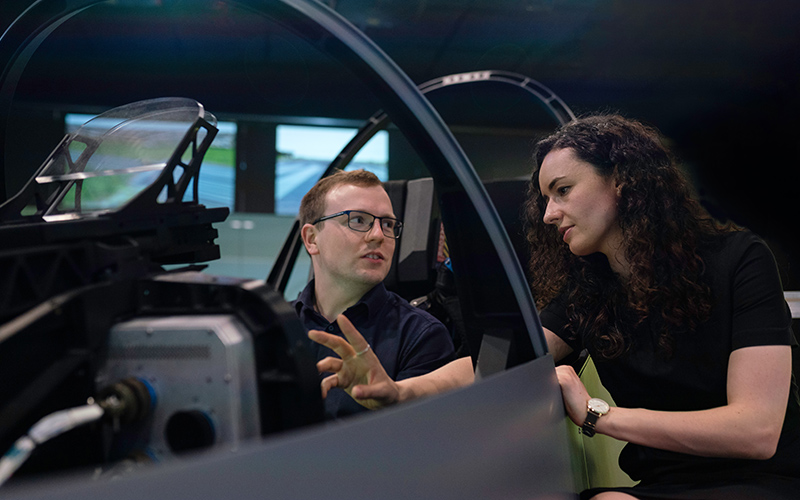
Dive into the world of aerospace engineering at Airbus. Learn how you can become a successful engineer with an innovative, industry-leading company.